数据分析案例:Olist 巴西电商公共数据集
数据集来源:
这是真实的商业数据,所有商店和合作伙伴的文本都已替换为《权力的游戏》中的家族名称。
了解 Olist 商业模式
Olist 是一个 B2B2C 的平台,为长尾中小商家提供将 SKU 一站分发到各大电商平台的服务,为他们提供在各大电商平台的信用背书,降低中小商家入驻大平台的门槛。对于大平台来说,Olist 是一个超级大卖家,依托众多中小商家,提供了海量 SKU。 Olist 的利润主要来自 SaaS 软件的订阅费(月费/年费)和每笔订单的佣金抽成。
上述只针对 2016~2018 年间的 Olist,现在的 Olist 的业务版图已经扩展了非常多。
选定北极星指标
任何商业公司的最终目的都是盈利,所以个人思路是:从利润开始层层拆分,每层只拆分成长性更高的那个指标。
- 第一次拆分:$利润 = 营业额 \times 利润率$
- 第二次拆分:$营业额 = 订阅费收入 + 佣金收入$
- 第三次拆分:$佣金收入 = 总交易额(GMV) \times 佣金率$
再往下拆会不得不产生信息损失,导致决策信息失真,所以这里选择 GMV 作为北极星指标。
理解数据集结构
数据源网站已经给出了所有字段的准确语义和 Data Schema,这里根据已有信息画出 ER 图即可。
erDiagram
	olist_customers {
		string customer_id PK
		string customer_unique_id UK
		string customer_zip_code_prefix
		string customer_city
		string customer_state
	}

	olist_orders {
		string order_id PK
		string customer_id FK
		string order_status
		timestamp order_purchase_timestamp
		timestamp order_approved_at
		timestamp order_delivered_carrier_date
		timestamp order_delivered_customer_date
		timestamp order_estimated_delivery_date
	}

	olist_order_items {
		string order_id  PK, FK
		int order_item_id PK
		string product_id FK
		string seller_id FK
		timestamp shipping_limit_date
		float price
		float freight_value
	}

	olist_products {
		string product_id PK
		string product_category_name
		int product_name_lenght
		int product_description_lenght
		int product_photos_qty
		float product_weight_g
		float product_length_cm
		float product_height_cm
		float product_width_cm
	}

	olist_sellers {
		string seller_id PK
		string seller_zip_code_prefix
		string seller_city
		string seller_state
	}

    olist_order_reviews {
		string review_id PK
		string order_id FK
		int review_score
		string review_comment_title
		string review_comment_message
		timestamp review_creation_date
		timestamp review_answer_timestamp
	}

	olist_order_payments {
		string order_id FK
		int payment_sequential
		string payment_type
		int payment_installments
		float payment_value
	}

	olist_geolocation {
		string geolocation_zip_code_prefix
		float geolocation_lat
		float geolocation_lng
		string geolocation_city
		string geolocation_state
	}

	product_category_name_translation {
		string product_category_name PK
		string product_category_name_english UK
	}

	olist_marketing_qualified_leads {
		string mql_id PK
		date first_contact_date
		string landing_page_id
		string origin
	}

	olist_closed_deals {
		string mql_id FK
		string seller_id FK
		string sdr_id
		string sr_id
		timestamp won_date
		string business_segment
		string lead_type
		string lead_behaviour_profile
		bool has_company
		bool has_gtin
		string average_stock
		string business_type
		string declared_product_catalog_size
		string declared_monthly_revenue
	}

	olist_customers||--o{olist_orders:"places"
	olist_geolocation||--o{olist_customers:"locates"
	olist_orders||--|{olist_order_items:"contains"
	olist_orders||--|{olist_order_payments:"paid_via"
	olist_orders||--o{olist_order_reviews:"receives"
	olist_products||--o{olist_order_items:"defines"
	olist_sellers||--o{olist_order_items:"fulfills"
	olist_geolocation||--o{olist_sellers:"locates"
	product_category_name_translation||--o{olist_products:"translates_category"
	olist_marketing_qualified_leads||--o|olist_closed_deals:"converts_to"
	olist_closed_deals|o--||olist_sellers:"becomes_seller"
探索性数据分析与问题拆解
从北极星指标入手,同期群多维度观察,发现并层层拆解问题。
单纯的 GMV 只是一个随着时间不断增长的 “虚荣指标”,我们实际需要洞察的是它的(年/月/季度)变化率。
利用 olist_orders_dataset 和 olist_order_items_dataset 计算 GMV 变化率之前首先要审计和清洗数据。
1
2
3
4
5
6
7
8
9
10
11
12
13
14
15
16
17
18
19
20
21
22
23
24
25
26
27
28
29
------------------------------------
  olist_orders_dataset 审计结果
------------------------------------


                                                                          alerts    type  count  missing  missing_pct  unique  unique_pct                   top  top_cnt   top_pct
column
order_id                                             may_pk_or_uk | may_need_nlp  object  99441        0     0.000000   99441    1.000000  00010242fe8c5a6d1ba2        1  0.000010
customer_id                                          may_pk_or_uk | may_need_nlp  object  99441        0     0.000000   99441    1.000000  00012a2ce6f8dcda20d0        1  0.000010
order_status                                                        too_many_top  object  99441        0     0.000000       8    0.000080             delivered    96478  0.970203
order_purchase_timestamp                             may_pk_or_uk | may_need_nlp  object  99441        0     0.000000   98875    0.994308   2017-11-20 10:59:08        3  0.000030
order_approved_at                             missing_need_handle | may_need_nlp  object  99441      160     0.001609   90733    0.912430   2018-02-27 04:31:10        9  0.000091
order_delivered_carrier_date                                 missing_need_handle  object  99441     1783     0.017930   81018    0.814734   2018-05-09 15:48:00       47  0.000473
order_delivered_customer_date  missing_need_handle | may_pk_or_uk | may_need_nlp  object  99441     2965     0.029817   95664    0.962018   2016-10-27 17:32:07        3  0.000030
order_estimated_delivery_date                                                     object  99441        0     0.000000     459    0.004616   2017-12-20 00:00:00      522  0.005249

------------------------------------
  olist_order_items_dataset 审计结果
------------------------------------

                                                              alerts     type   count  missing  missing_pct  unique  unique_pct                   top  top_cnt   top_pct   min      max        mean  median         std   zero  zero_pct  negative  negative_pct  skewness    kurtosis
column
order_id                                                               object  112650        0          0.0   98666    0.875863  8272b63d03f5f79c56e9     21.0  0.000186   NaN      NaN         NaN     NaN         NaN    NaN       NaN       NaN           NaN       NaN         NaN
order_item_id        check_polar_valid | high_skewed | may_high_kurt    int64  112650        0          0.0      21    0.000186                   NaN      NaN       NaN  1.00    21.00    1.197834    1.00    0.705124    0.0    0.0000       0.0           0.0  7.580356  103.857361
product_id                                                             object  112650        0          0.0   32951    0.292508  aca2eb7d00ea1a7b8ebd    527.0  0.004678   NaN      NaN         NaN     NaN         NaN    NaN       NaN       NaN           NaN       NaN         NaN
seller_id                                                              object  112650        0          0.0    3095    0.027474  6560211a19b47992c366   2033.0  0.018047   NaN      NaN         NaN     NaN         NaN    NaN       NaN       NaN           NaN       NaN         NaN
shipping_limit_date                                                    object  112650        0          0.0   93318    0.828389   2017-07-21 18:25:23     21.0  0.000186   NaN      NaN         NaN     NaN         NaN    NaN       NaN       NaN           NaN       NaN         NaN
price                                                                 float64  112650        0          0.0    5968    0.052978                   NaN      NaN       NaN  0.85  6735.00  120.653739   74.99  183.633928    0.0    0.0000       0.0           0.0  7.923208  120.828298
freight_value                                                         float64  112650        0          0.0    6999    0.062130                   NaN      NaN       NaN  0.00   409.68   19.990320   16.26   15.806405  383.0    0.0034       0.0           0.0  5.639870   59.788253
存在一些缺失率低于 3% 的字段,不影响整体分析,无需处理。
在 TableauBI 中对 GMV 可视化处理后,可以明显发现 GMV 持续高波走低,经营情况不容乐观。
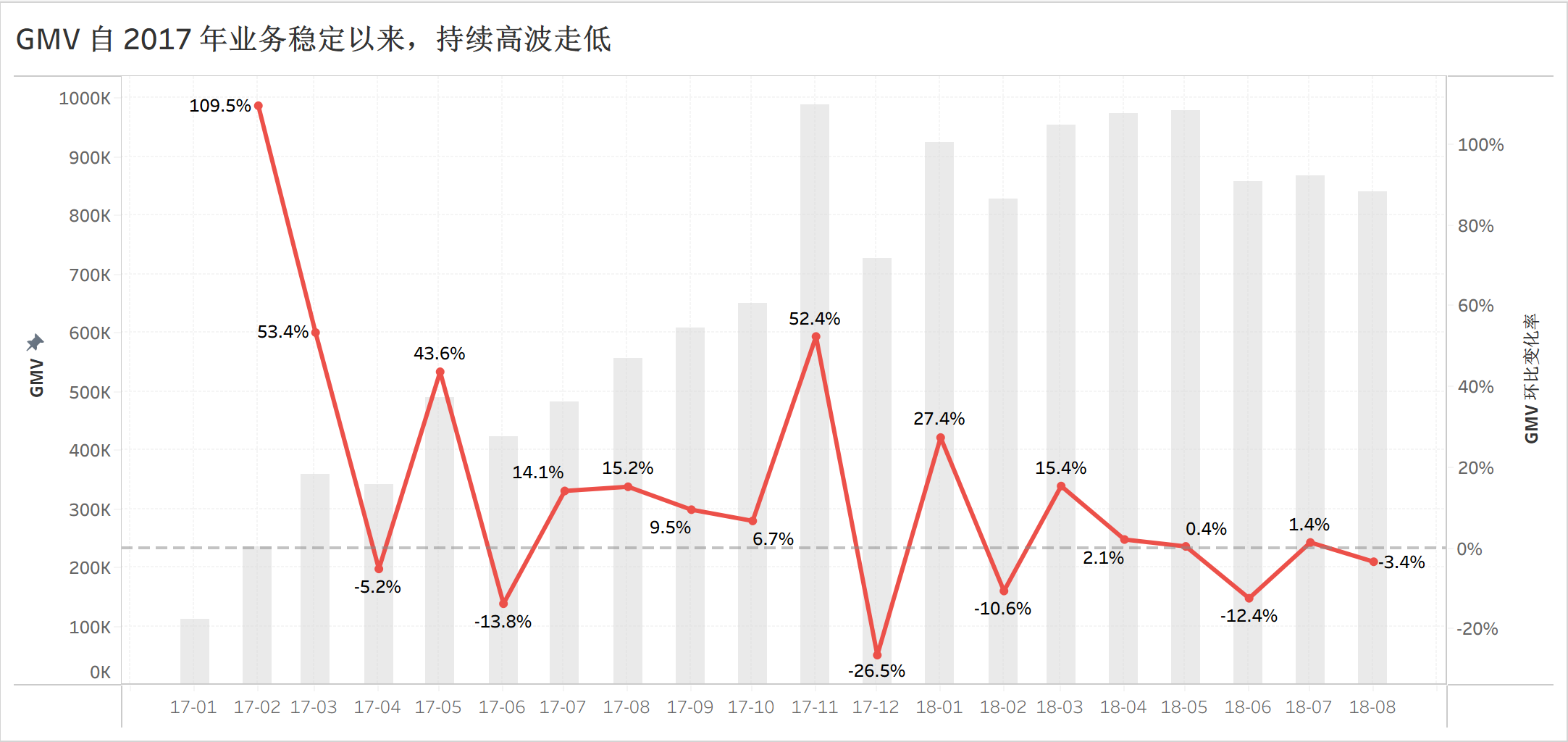
发现问题后,需要找问题根因,手段是进一步拆分 GMV,看到底是哪个子指标导致 GMV 持续走低。
这里的拆分方式有很多,但是根据 MECE 原则,我们一般优先把 GMV 拆分为 $订单量 \times 订单均价$。
对比订单量和订单均价与 GMV 的定基变化率,可以明显看到 GMV 几乎完全是由订单量驱动的。
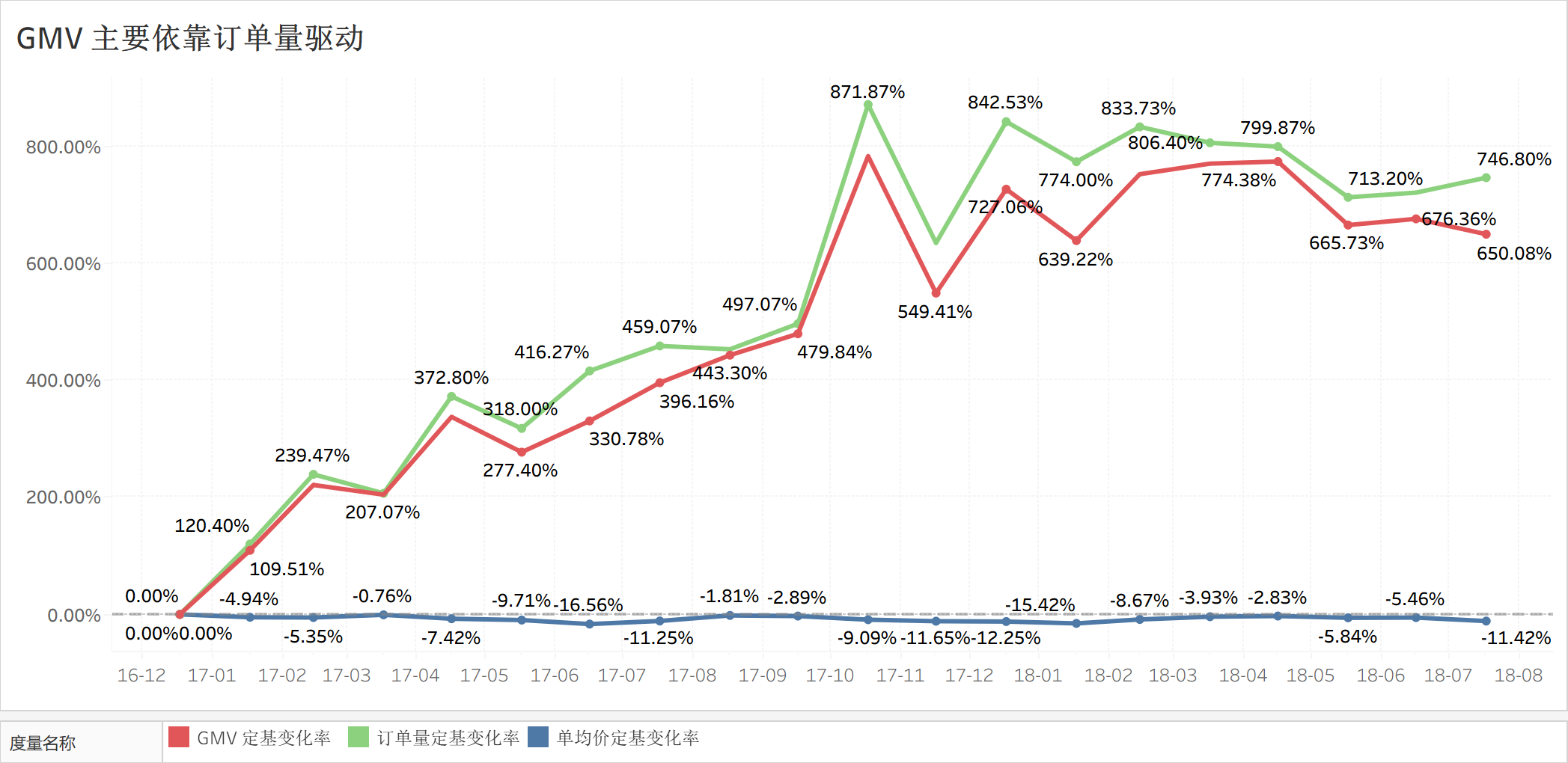
也就是说,GMV 的异常趋势主要是订单量出了问题。那为什么订单量会出问题。
考虑到 Olist 当时作为初创公司的背景,可以往两个方面考虑:新用户少了或者老用户走了。
所以我们可以进一步拆分:$订单量 = 新用户订单 + 老用户订单$
列出新老用户订单量的逐月占比,可以清晰地观察到,几乎所有订单都来自新用户,老用户复购比例极低。
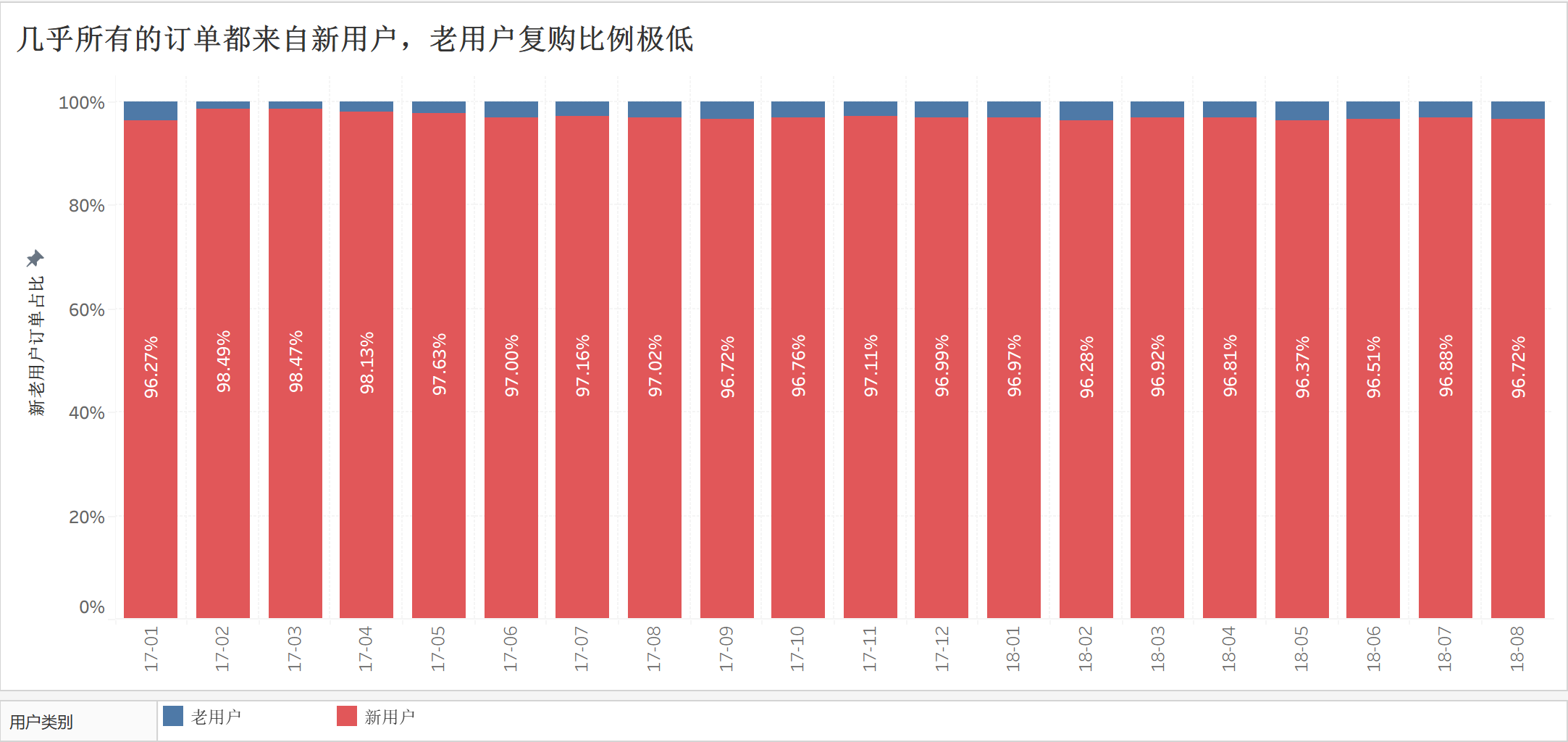
那现在的问题就更清晰了,新用户开发接近瓶颈,但老用户又留不下来。那用户为什么不复购呢?
用户不复购的理由无非就两种:商品本身不需要频繁复购或者购买体验差导致不愿意再复购。
对比新老用户的商品购买偏好,可以发现没有明显区别,但买的东西大多数都是耐用品,本身复购率就比较低。
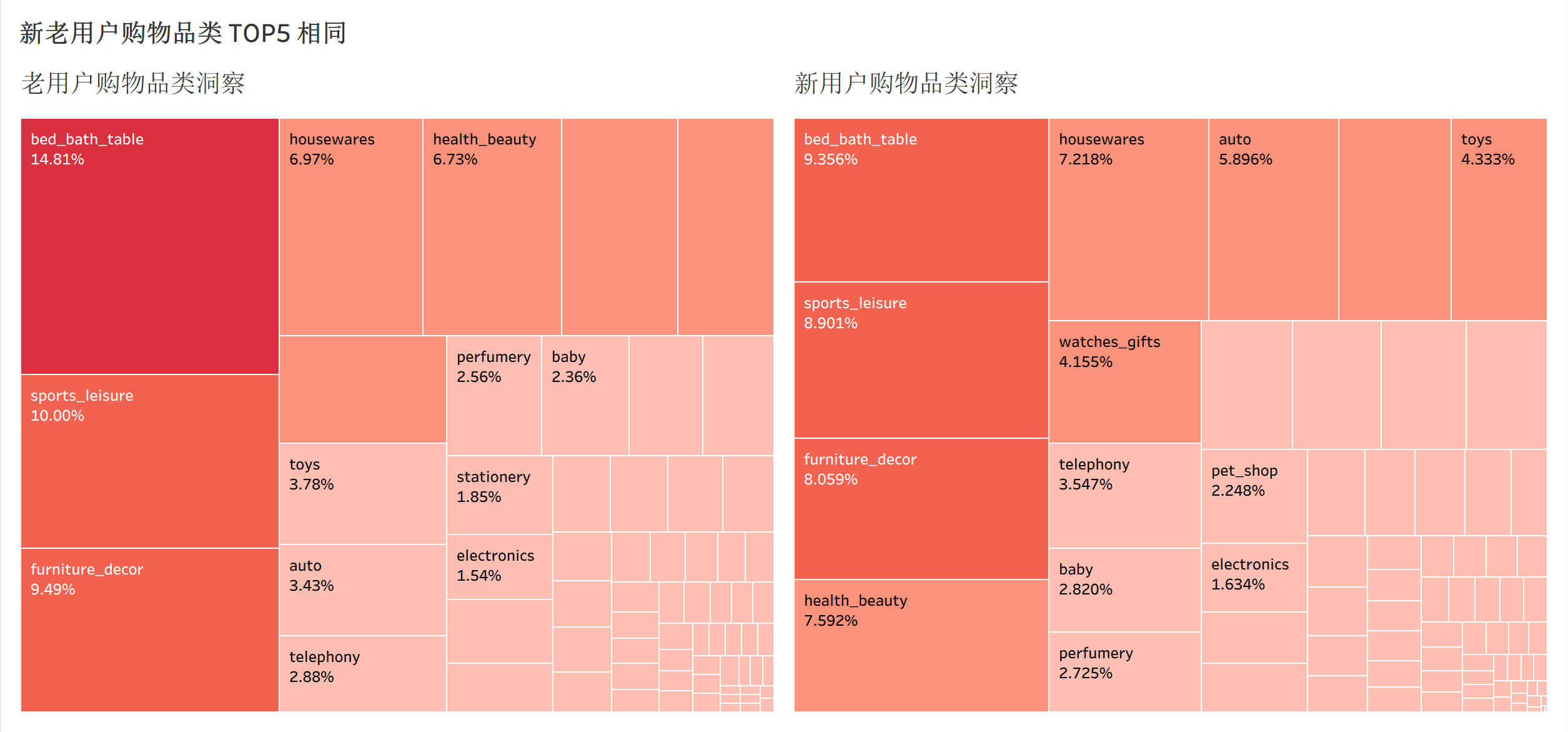
| 英文分类名 | 中文含义 | 产品属性 | 复购频率 |
|---|---|---|---|
| bed_bath_table | 床上用品、卫浴、桌布 | 半耐用品 | 低。一套床单或毛巾通常可以使用 1-2 年。 |
| sports_leisure | 运动与休闲(器材、服装) | 耐用品/消费品 | 中低。运动器材(如哑铃、帐篷)属于典型耐用品。 |
| furniture_decor | 家具装饰(灯具、挂饰等) | 硬耐用品 | 极低。装修或布置房间是一次性需求。 |
| health_beauty | 健康美容(仪器、化妆品) | 消费品 | 中。虽然护肤品是消耗品,但 Olist 上有很多是美容仪器。 |
| housewares | 家用器具(厨具、小家电) | 耐用品 | 低。锅铲、烤箱等家电除非损坏,否则很少复购。 |
另一方面,我们还要看看那些非满分评价主要是在抱怨什么。
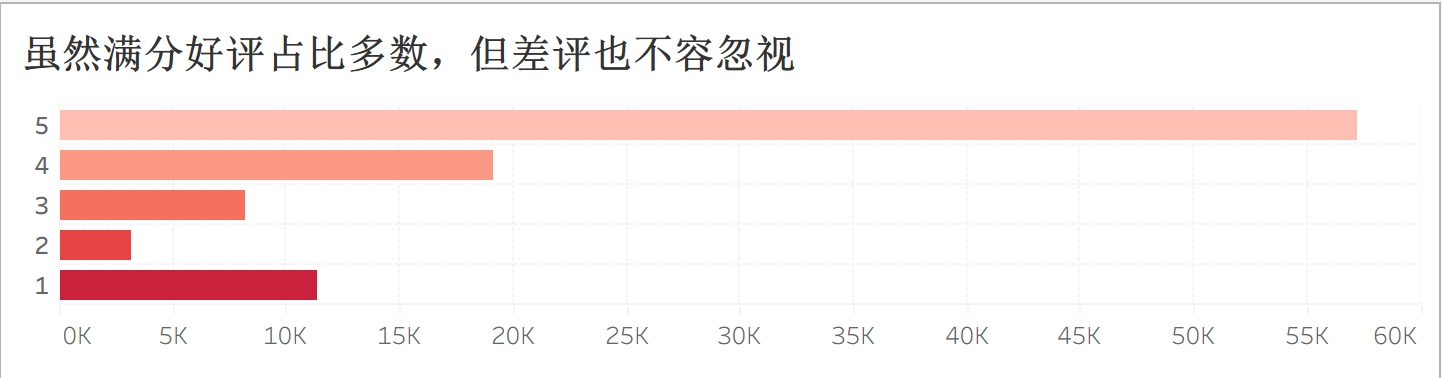
这里需要 NLP 接入进行情感分析,和主题词提取。
1
2
3
4
5
6
7
8
9
10
11
12
13
14
15
16
17
18
19
20
21
22
23
24
25
26
27
28
29
30
31
32
33
34
35
36
37
38
39
40
41
42
43
44
45
46
47
48
49
50
51
52
53
54
55
56
57
58
59
60
61
62
63
64
65
66
67
68
69
70
71
72
73
74
75
76
77
78
79
80
81
import os
import sys

# 配置 HuggingFace 镜像
os.environ['HF_ENDPOINT'] = 'https://hf-mirror.com'

import nltk
import pandas as pd

# 配置打印时不折叠字段
pd.set_option('display.width', None)
pd.set_option('display.max_columns', None)

from bertopic import BERTopic
from nltk.corpus import stopwords
from sklearn.feature_extraction.text import CountVectorizer


def ensure_nltk_resources():
    """
    确保 NLTK 资源存在,用于停用词处理

    :return: None
    """
    try:
        nltk.find('corpora/stopwords')
    except LookupError:
        print('正在尝试下载 NLTK stopwords...')
        try:
            nltk.download('stopwords')
        except Exception as e:
            print(f'\nNLTK 资源下载失败:{e}')
            sys.exit(1)


def sense_analysis():
    """
    情感分析处理

    :return: None
    """
    print("--- 程序已启动,正在初始化,请稍候... ---")
    # 1. 确保 NLTK 停用词可用
    ensure_nltk_resources()
    pt_stopwords = stopwords.words('portuguese')
    # 剔除无意义的口水词
    extra_stopwords = ['ol', 'bo', 'bababa', 'jjjj', 'io', 'td', 'ta', 'bommm']
    pt_stopwords.extend(extra_stopwords)
    # 2. 读取并清洗数据
    reviews = pd.read_csv('./dataset/olist_order_reviews_dataset.csv')
    reviews = reviews.dropna(subset=['review_comment_message'])
    reviews = reviews[reviews['review_comment_message'].str.strip() != '']
    reviews = reviews.loc[reviews['review_score'] < 5, :]
    reviews['clean_text'] = reviews['review_comment_message'].str.lower()
    print(f'评论清洗完成,有效评论量: {len(reviews)}')
    # 3. 初始化 BERTopic
    print('正在初始化 BERTopic 模型...')
    vectorizer_model = CountVectorizer(stop_words=pt_stopwords)
    topic_model = BERTopic(
        language='multilingual',
        embedding_model='sentence-transformers/paraphrase-multilingual-MiniLM-L12-v2',
        vectorizer_model=vectorizer_model,
        verbose=True,
        nr_topics='auto'
    )
    # 训练模型
    topics, probs = topic_model.fit_transform(reviews['clean_text'])
    # 4. 获取主题列表
    topic_info = topic_model.get_topic_info()
    print('\n主要主题列表 (Top 20):')
    print(topic_info.head(20))
    top_20_topics = topic_info.head(20).copy()
    # 6. 导出结果
    # 将主题 ID 映射回原始数据
    output_path = './dataset/bad_reviews_top_topics.csv'
    top_20_topics.to_csv(output_path, index=False)
    print(f'\n结果已导出至: {output_path}')


if __name__ == '__main__':
    sense_analysis()
| 主题 ID | 样本数量 | 主题标签 (Name) | 关键词 (Representation) | 代表性评论内容 (中译) |
|---|---|---|---|---|
| -1 | 8875 | 未分类/综合投诉 | 产品, 购买, 物流, 店铺, 收到, 期限 | “订单显示已送达但我没收到”, “提前送达且质量很好”, “只收到了两个中的一个” |
| 0 | 534 | 数量缺失 | 单位, 两件, 仅, 收到, 购买, 零件 | “买了2个单位只收到1个!!”, “我买了两个,结果只发了一个。” |
| 1 | 526 | 总体好评 | 好, 棒, 推荐, 不错, 喜欢, 顶级的 | “好”, “很好”, “非常推荐” |
| 2 | 507 | 提前送达(质量) | 提前, 快速, 期限, 收到, 质量 | “比预期提前送达,产品非常好!”, “产品提前到了。” |
| 3 | 410 | 配送时效 | 提前, 期限, 延迟, 准时, 延期 | “提前到货”, “在期限内送达”, “物流稍有延迟” |
| 4 | 371 | 包装破损 | 箱子, 错误, 压扁, 包装, 缺陷, 损坏 | “包装很差,箱子都压扁了”, “产品收到时包装盒是坏的。” |
| 5 | 346 | 颜色错误 | 颜色, 蓝色, 黑色, 错误, 粉色, 白色 | “颜色不对”, “买了粉色结果发了黑色。虽然产品不错但颜色错了。” |
| 6 | 341 | 优质/推荐 | 棒, 优秀, 质量, 漂亮, 推荐 | “产品很好”, “质量非常好的产品” |
| 7 | 289 | 逾期未达(日期) | 2018, 日期, 预计, 今天, 还没收到 | “预计27号送达,今天29号了还没收到!”, “一直没收到货也没发票。” |
| 8 | 285 | 邮局自提问题 | 家里, 邮局, 去取, 运费, 住宅 | “我付了送货上门的运费,却得自己去邮局取货!”, “产品没送到家。” |
| 9 | 258 | 手表类目 | 手表, 卡西欧, 表带, 女款, 盒子 | “手表非常好”, “没收到手表”, “手表没送达” |
| 10 | 234 | 订单查询/无回应 | 订单, 包裹, 还没, 联系, 没人 | “还没收到我的订单”, “联系不上客服,订单还没到” |
| 11 | 212 | 订单取消 | 取消, 申请, 没收到, 已经 | “逾期未送达我申请取消”, “没收到货也没要求取消”, “申请了取消结果还是发货了” |
| 12 | 182 | 状态正常 | OK, 一切正常, 正常, 顺利 | “一切 OK”, “全部正常”, “符合预期” |
| 13 | 167 | 性价比/有用 | 好, 比较, 价格, 柔软, 实用 | “非常好”, “非常实用”, “考虑到价格很不错” |
| 14 | 163 | 无法评价(未收到) | 还没, 收到, 目前, 无法评价 | “目前还没收到产品,无法给出评价”, “还没收到货” |
| 15 | 162 | 店铺推荐 | 店铺, 推荐, 棒, 购买, 恭喜 | “推荐这家店”, “店铺和产品都值得推荐” |
| 16 | 153 | 家具/椅子类 | 椅子, 靠背, 组装, 螺丝, 缺少 | “少发了一把椅子”, “椅子不错”, “买了5把目前只收到了4把” |
| 17 | 146 | 物流极速 | 快速, 效率, 速度, 超快, 服务 | “物流非常快”, “送货效率很高” |
| 18 | 138 | 退款/未收到 | 收到, 没收到, 退款, 完整 | “没收到产品”, “要求全额退款” |
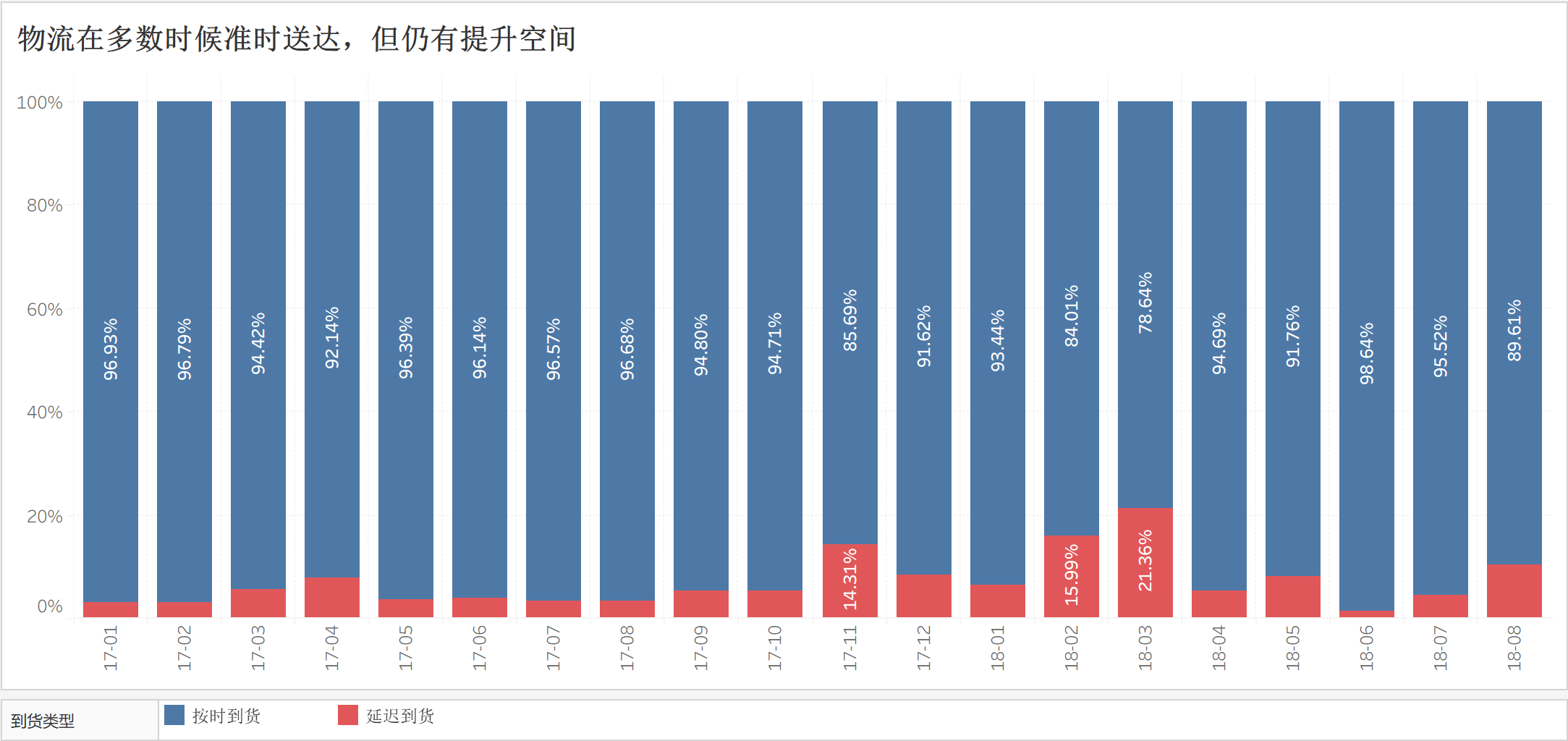
使用 BERTopic 进行自然语言情感分析后,发现买家的抱怨主要集中在物流方面,我们需要进一步衡量物流指标。
观察到,实际的数据没有预想的糟糕,多数时候还是可以准时送达的。
图中 17 年 11 月是黑色星期五,物流压力陡增导致延迟率上升;另外,18 年 2 月和 3 月是巴西物流工人大罢工,全国邮政基本停摆,属于不可抗力导致的物流延迟率上升。